Introduction to Ground Beef Bibimbap
If you’re a young professional juggling deadlines and social commitments, you know the importance of quick yet delicious meals. Enter ground beef bibimbap—a savory, nutritious dish that not only satisfies your cravings but is also incredibly easy to whip up after a long day at the office. This Korean classic is all about vibrant flavors, hearty ingredients, and customization that fits your busy lifestyle perfectly.
Why Ground Beef Bibimbap is Perfect for Young Professionals
One of the standout features of ground beef bibimbap is its versatility. You can adjust the toppings according to what you have on hand or what you’re in the mood for. Want to use that leftover spinach in the fridge? Go for it! Craving a bit of spice? A splash of gochujang will do the trick. This adaptability makes it the ideal dish for young professionals who might not have time to cook complicated recipes but still want a fulfilling meal.
Not only is the preparation quick, often taking under 30 minutes, but ground beef bibimbap is also packed with nutrients. Incorporating vegetables like carrots, zucchini, or bok choy not only elevates the dish’s presentation but also boosts its health benefits. According to Healthline, the inclusion of a variety of veggies contributes to daily nutritional needs and helps maintain energy levels, especially crucial for those bustling around in their careers.
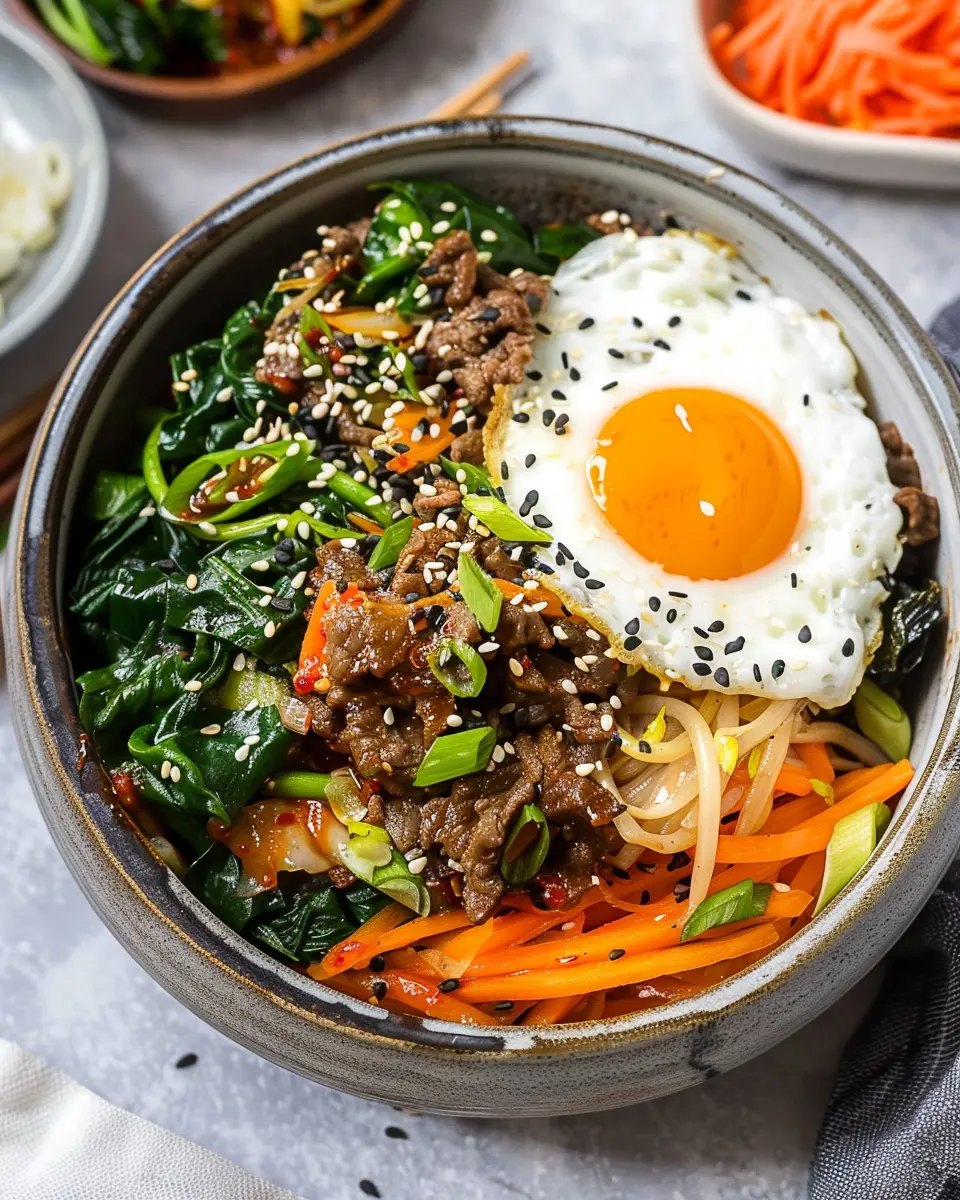
Additionally, the hearty addition of ground beef offers protein—crucial for muscle repair and satiation. The beauty of this dish lies in its balancing act of textures and flavors; the crispy vegetables contrast with the tender beef and a perfectly fried egg on top, creating a delightful culinary experience.
Moreover, the process of making ground beef bibimbap can become a fun weekday ritual. Whether cooking alone while listening to music or inviting a friend over to prepare dinner together, it fosters creativity and caregiving. So why not swap takeout for a home-cooked meal that’s just as quick but ten times more rewarding? Make your next mealtime a celebration with ground beef bibimbap!
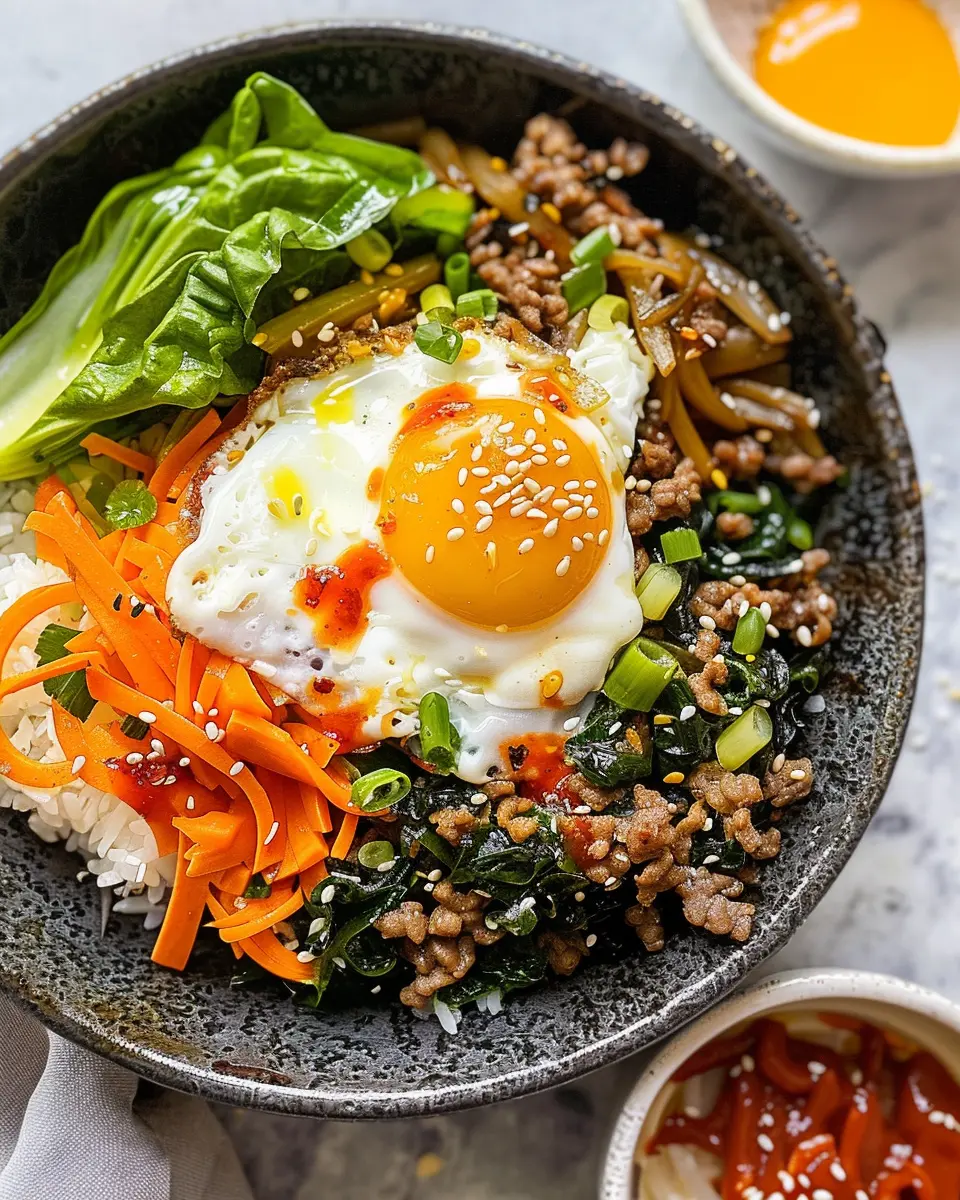
Ingredients for Ground Beef Bibimbap
Essential Ingredients for a Flavorful Dish
When creating a delicious ground beef bibimbap, starting with the right ingredients is key. Here’s what you’ll need for a vibrant and satisfying meal:
- Ground Beef: Choose high-quality, lean ground beef for a hearty base.
- Rice: Short-grain white rice is traditional, providing that perfect sticky texture.
- Vegetables: Julienne carrots, spinach, and cucumber add crunch and color.
- Gojujang: This spicy-sweet Korean chili paste is indispensable for flavor.
- Sesame Oil: A drizzle adds richness and depth.
- Eggs: A fried or sunny-side-up egg on top ties everything together beautifully.
Optional Ingredients for Personalization
Feel free to put your own twist on this ground beef bibimbap! Consider these tasty additions:
- Turkey Bacon: For an extra layer of crunch and flavor.
- Chicken Ham: If you’re looking for a protein-packed alternative.
- Mushrooms: Sautéed shiitake or button mushrooms can elevate the dish.
- Kimchi: A side of this fermented delicacy adds a tangy kick.
Experimenting with these ingredients not only makes the dish your own but also keeps mealtime exciting! For more on the health benefits of incorporating more vegetables in your meals, check out Healthline.
For a deeper dive into Korean cuisine, visit Maangchi for more recipes and tips!
Preparing Ground Beef Bibimbap
If you’re ready to spice up your meal routine, look no further than ground beef bibimbap! This vibrant and nutritious dish is not only visually appealing but also incredibly delicious and versatile. With a variety of textures and flavors, it’s sure to be a hit whether you’re cooking for yourself or entertaining friends. Follow these simple steps, and you’ll have a beautiful bibimbap bowl in no time.
Gather and Prepare Your Ingredients
The first step in crafting your ground beef bibimbap is to gather your ingredients, which are mostly straightforward and easy to find. Here’s what you’ll need:
-
For the Ground Beef:
-
1 pound of ground beef
-
2 tablespoons of soy sauce
-
1 tablespoon of sesame oil
-
1 teaspoon of minced garlic
-
1 tablespoon of brown sugar
-
For the Vegetables:
-
1 cup of thinly sliced carrots
-
1 cup of spinach or bok choy
-
1 cup of cucumbers, julienned
-
1 cup of shiitake mushrooms, sliced
-
1 tablespoon of vegetable oil for sautéing
-
For the Toppings:
-
4 eggs
-
Seaweed strips (optional)
-
Sesame seeds (optional)
-
For the Gochujang Sauce:
-
3 tablespoons of gochujang
-
1 tablespoon of sesame oil
-
1 tablespoon of sugar
-
1 tablespoon of water
Don’t forget to have some warm, cooked rice ready to round out your bibimbap!
Create the Gochujang Sauce
Now that everything is prepped, let’s whip up a quick and flavorful gochujang sauce. This spicy-sweet condiment is a hallmark of ground beef bibimbap and really pulls the dish together.
- In a small bowl, mix the gochujang, sesame oil, sugar, and water until you get a smooth and slightly thick consistency.
- Adjust the sweetness or spice to your liking: if you love heat, add a bit more gochujang, or if you prefer it milder, a bit more sugar will do the trick.
Feel free to experiment! You can even find a detailed guide on gochujang sauce variations on Serious Eats.
Cook the Ground Beef
With the sauce done, it’s time to focus on the ground beef.
- In a skillet over medium-high heat, add the ground beef and break it up into smaller pieces with a spatula.
- Once it starts to sizzle, add the soy sauce, sesame oil, minced garlic, and brown sugar to create a rich, savory flavor.
- Cook until the beef is browned and no longer pink, about 5-7 minutes.
Give it a taste! This step is essential—you want to ensure it’s flavored just right before moving on.
Sauté the Vegetables
Now for the colorful veggies that make your ground beef bibimbap so delightful.
- In the same skillet (or use a different one if you prefer) over medium heat, add vegetable oil.
- Toss in the mushrooms, carrots, and cook for 3-4 minutes until slightly tender.
- Add spinach or bok choy and sauté until wilted. The key is to keep the crunch, so you don’t want to overdo it.
Fry the Eggs to Perfection
As we near the finish line, next up are those beautiful fried eggs.
- In a small nonstick pan over medium heat, add a bit of oil.
- Crack an egg into the pan and cook until the whites are set but the yolk is still runny, about 2-3 minutes for sunny-side up.
Perfectly cooked eggs are a must for ground beef bibimbap!
Assemble Your Bibimbap Bowl
Now comes the fun part—assembling your bowl!
- Start by placing a generous scoop of rice at the bottom of your bowl.
- Neatly arrange the sautéed beef and vegetables on top of the rice.
- Top it all off with your fried egg and a drizzle of the gochujang sauce. If you want, sprinkle some sesame seeds and seaweed strips for an added crunch.
Congratulations! You’ve successfully created a stunning ground beef bibimbap bowl. This dish not only looks impressive but is also packed with vitamins and protein, making it a wholesome meal you can feel good about. So, what are you waiting for? Dig in and enjoy the burst of flavors!
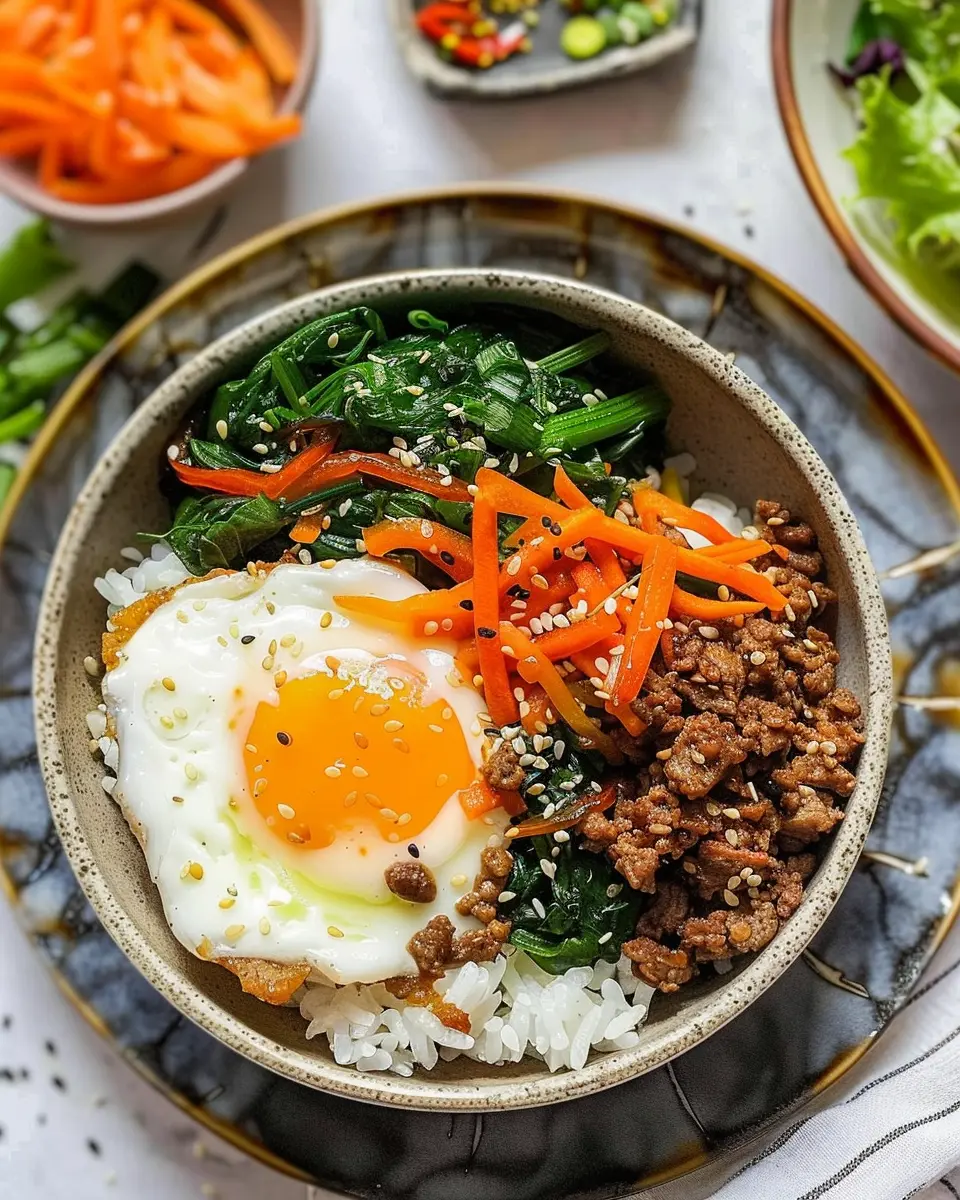
Variations on Ground Beef Bibimbap
Embracing Vegetarian and Vegan Alternatives
If you’re looking to ditch the meat or simply want to explore new flavors, ground beef bibimbap can easily transform into a delightful vegetarian or vegan dish. For a plant-based option, consider using:
- Mushroom medley: Portobello, shiitake, and cremini offer rich flavors that mimic the umami of beef.
- Tofu or tempeh: These protein-packed alternatives can be marinated in soy sauce or sesame oil for added depth.
- Lentils: Cooked lentils provide a hearty texture that pairs beautifully with the dish’s vegetables.
Don’t forget to amp up your veggies! Fresh spinach, shredded carrots, and sautéed zucchini add both nutrients and color. For more about plant-based proteins, check out the Harvard School of Public Health guide on plant-based eating.
Exploring Different Proteins You Can Use
If you’re open to experimenting beyond ground beef, a range of proteins can elevate your bibimbap experience. Here are some scrumptious alternatives:
- Ground turkey: A leaner protein that still delivers flavor and satisfaction.
- Chicken ham: For those who enjoy a smokier taste, this can enhance your bibimbap, adding a touch of richness.
- Turkey bacon: Crumbled on top, it brings a crispy texture that complements the other ingredients.
Each of these proteins provides a unique spin on the classic dish while still honoring the essence of ground beef bibimbap. Remember, the beauty of this meal lies in its adaptability—so feel free to experiment! Consider checking out Bon Appétit’s take on bibimbap variations.
With these variations, you’ll discover new ways to enjoy this beloved dish, whether you’re vegan or simply in the mood for something different. What flavor combination will you try next?
Cooking Tips and Notes for Ground Beef Bibimbap
Choosing the Right Rice for Your Bowl
When it comes to your ground beef bibimbap, selecting the right rice is key to achieving that perfect mix of flavors and textures. Short-grain rice is your best option, as it sticks together nicely, making it easier to eat with chopsticks. Look for Japanese or Korean-style rice, often labeled as “sticky rice” or “sushi rice.” For a nutritious twist, consider using brown rice, which adds a nutty flavor and extra fiber.
Tips for Meal Prep and Storage
Meal prepping your ground beef bibimbap can truly simplify your week. You can cook the rice and beef in advance, then store them separately in airtight containers in the fridge for up to five days. To keep your veggies fresh, chop them just before serving and avoid pre-cooking them; this way, they retain their crunch. If you’re planning to enjoy your bibimbap throughout the week, you might also want to check out this guide on proper meal storage techniques to maximize freshness.
Feel free to customize your bibimbap with seasonal veggies to elevate your meal while broadening your palate!
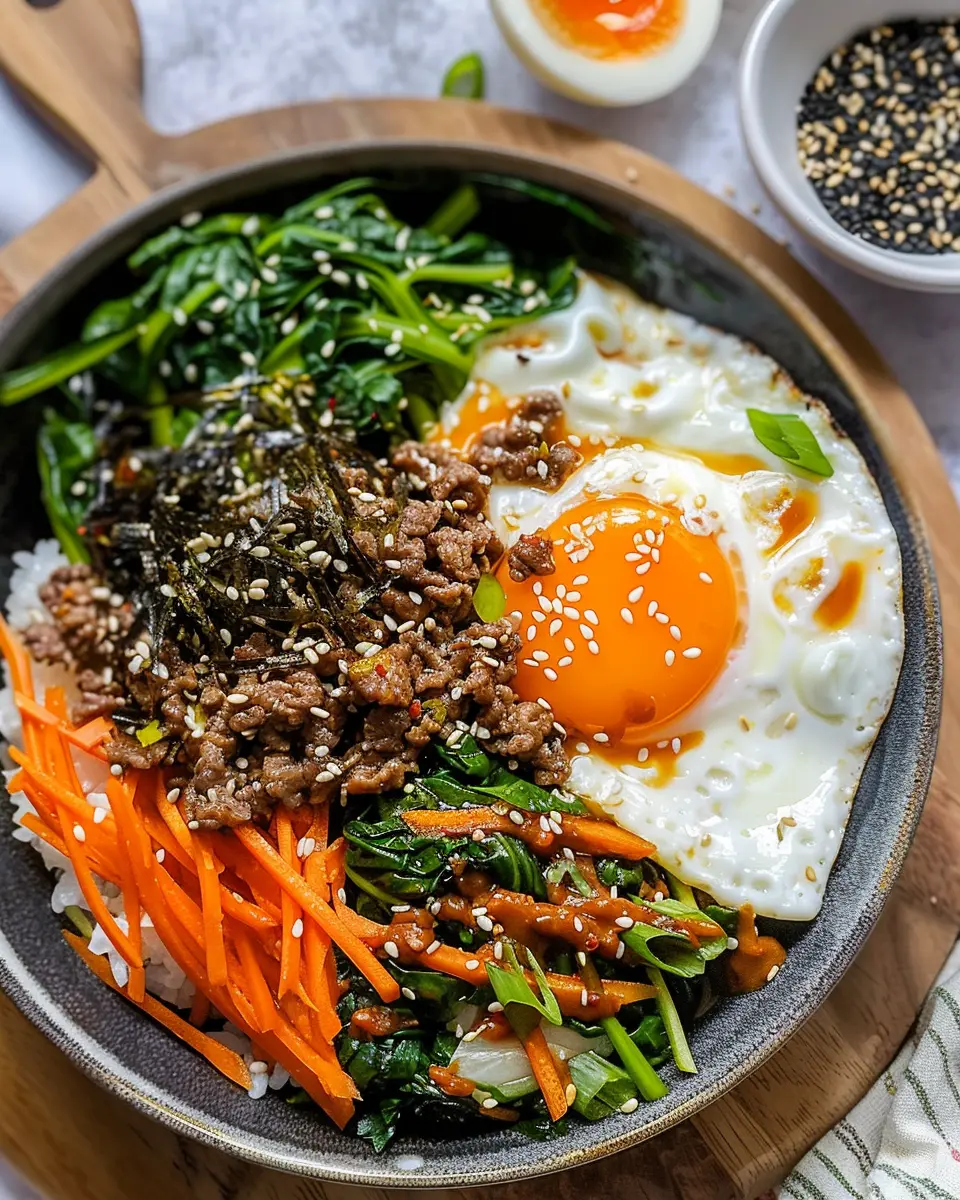
Serving Suggestions for Ground Beef Bibimbap
Creative Ways to Serve Your Bibimbap
Elevate your ground beef bibimbap experience with some fun serving ideas! First, consider using individual stone bowls (dolsot) for that traditional Korean touch. The bowls retain heat beautifully, creating a delightful crispy rice layer at the bottom. You can also get creative with presentation by adding a vibrant splash of color; think purple cabbage, and bright orange carrots alongside your bibimbap.
For a make-your-own experience, set up a bibimbap bar! Lay out cooked ingredients, sauces, and toppings so diners can customize their bowls. It’s perfect for gatherings or casual weekday dinners!
Pairing Sides that Complement the Dish
Pair your ground beef bibimbap with refreshing sides that balance out the dish’s richness. Classic options include:
- Kimchi: A tangy, fermented side that adds zing and probiotics.
- Seasonal Vegetables: Lightly blanched or pickled options like cucumber or daikon complement the meal beautifully.
For an extra crunch, consider serving with some Korean pancakes (jeon) or lightly seasoned edamame. These vibrant sides not only enhance flavors but also provide a satisfying taste experience.
For more inspiration on side dishes, check out this Korean side dishes guide. Each bite is sure to brighten your meal and keep your taste buds dancing!
Time Breakdown for Ground Beef Bibimbap
Preparation Time
Getting ready to make your ground beef bibimbap only takes about 15 minutes. This includes gathering your ingredients, chopping veggies, and preparing any sauces you might want to add. A well-organized kitchen can make this part of the process a breeze!
Cooking Time
Once you’re prepped, cooking the ground beef bibimbap will take around 20 minutes. You’ll be browning the beef and sautéing the vegetables, which brings all those delicious flavors together.
Total Time
In total, you’re looking at about 35 minutes from start to finish. Perfect for a weeknight dinner when you want something quick yet satisfying! If you’re interested in enhancing your cooking experience, check out The Kitchn for tips on making meal prep faster and even more enjoyable.
Nutritional Facts for Ground Beef Bibimbap
When you whip up a delicious bowl of ground beef bibimbap, it’s not just comforting but also packed with nutrients. Let’s break down what you’re putting on your plate.
Calories Breakdown
A serving of ground beef bibimbap typically contains around 600-700 calories. This hearty dish combines protein from the beef, healthy fats from the egg, and a variety of vitamins from fresh vegetables.
Key Nutritional Information
- Protein: Approximately 30 grams – a great source for muscle repair and energy.
- Fat: Around 25 grams, including healthy fats if you’re using lean ground beef.
- Carbohydrates: Roughly 70 grams from rice and veggies – fueling your day.
- Fiber: 4-5 grams from the assortment of vegetables, promoting digestive health.
Incorporating ground beef bibimbap into your diet can support a balanced lifestyle, provided you keep portion sizes in mind. Want to dive deeper into nutrition? Check out resources like NutritionData for specific breakdowns!
FAQs about Ground Beef Bibimbap
Can I use different sauces?
Absolutely! While the traditional sauce for ground beef bibimbap is gochujang (Korean red pepper paste), feel free to experiment with flavors that suit your palate. Some popular alternatives include:
- Soy sauce for a savory touch
- Sesame oil for a nutty flavor
- Sriracha for an extra kick
Mixing these sauces can also create a unique taste profile. Just remember to adjust the quantities to maintain a balanced flavor.
How do I store leftovers properly?
Storing your ground beef bibimbap leftovers can be a breeze! Here’s how you can do it:
- Cool it Down: Let your bibimbap cool to room temperature before packing it away.
- Use Airtight Containers: Divide the ingredients into separate containers if possible to keep everything fresh longer.
- Refrigerate: Store in the fridge for up to 3 days. For longer storage, consider freezing — it can last up to 3 months!
When you’re ready to enjoy it again, reheat on the stove for the best results!
Is bibimbap always served with an egg?
Traditionally, bibimbap is topped with a fried or raw egg, which adds richness and creaminess. However, if you’re not an egg fan, it’s perfectly fine to skip it! Many people customize their bowls according to dietary preferences or restrictions. You could even try replacing the egg with a scoop of avocado for a creamy alternative.
For more tips on variations and serving suggestions, you might check out Korean cuisine blogs for creative spin ideas!
Conclusion on Ground Beef Bibimbap
Recap of Benefits and Encouragement to Try the Recipe
In summary, ground beef bibimbap is not only a delightful fusion of flavors but also a nutritious option packed with essential nutrients. Incorporating lean beef into this dish provides protein for muscle growth, while vibrant vegetables contribute vitamins and fiber. With its customizable nature, you can easily adapt the recipe to fit your dietary preferences, whether you’re a meat lover or a vegetarian.
I encourage you to give this recipe a shot—not only will it impress your taste buds, but it’s also perfect for meal prepping. So fire up your stove, gather your ingredients, and enjoy this vibrant and satisfying meal today! For more about Korean cuisine, check out resources from the Korean Culinary Federation.
PrintGround Beef Bibimbap: Easy Recipe for Flavorful Homemade Delight
Learn how to make a delicious Ground Beef Bibimbap with this easy recipe that brings authentic flavors to your home kitchen.
- Prep Time: 15 minutes
- Cook Time: 15 minutes
- Total Time: 30 minutes
- Yield: 4 servings 1x
- Category: Main Dish
- Method: Stovetop
- Cuisine: Korean
- Diet: Meat-based
Ingredients
- 1 pound ground beef
- 2 cups cooked rice
- 1 cup spinach
- 1 carrot, julienned
- 1 cup bean sprouts
- 2 eggs
- 2 tablespoons soy sauce
- 1 tablespoon sesame oil
- 2 teaspoons gochujang (Korean chili paste)
- 1 teaspoon garlic, minced
Instructions
- In a skillet, cook the ground beef over medium heat until browned. Drain excess fat.
- Add soy sauce, garlic, and sesame oil to the beef and mix well.
- In a separate pot, blanched the spinach and bean sprouts, then sauté the carrots.
- Fry the eggs sunny-side up in a small pan.
- To serve, layer rice in a bowl, top with beef, vegetables, and egg. Drizzle with gochujang.
Notes
- You can customize the vegetables based on your preference.
- For a vegetarian option, use tofu instead of ground beef.
Nutrition
- Serving Size: 1 bowl
- Calories: 650
- Sugar: 2g
- Sodium: 500mg
- Fat: 30g
- Saturated Fat: 10g
- Unsaturated Fat: 15g
- Trans Fat: 0g
- Carbohydrates: 65g
- Fiber: 3g
- Protein: 35g
- Cholesterol: 200mg
Keywords: Ground Beef Bibimbap, Bibimbap Recipe, Korean Cooking